OFFSHORE WIND • BIODIVERSITY MONITORING
RWE SeaMe: Long-Term Underwater Camera Monitoring Around Offshore Wind Farms
30 experts
From 6 different teams globally monitoring impact
3 years
Biodiversity and ecosystem condition monitoring
“Flexibility, a willingness to go the extra mile, independence, and effective collaboration with other team members are all essential to drive the mission of the SeaMe project forward. What can I say—Anemo robotics performance is truly outstanding and fun to work with!”
DR. PETRA RINGELTAUBE - SENIOR ENVIRONMENT MANAGER & MARINE ECOLOGIST
The Project
Understanding how fish interact with new reef structures
The SeaMe project, led by RWE, explores scalable, low-impact approaches to monitoring offshore ecosystems using science-based, non-invasive methods.
At the Kaskasi wind farm near Helgoland, Anemo Robotics contributes continuous, camera-based monitoring of fish and other mobile fauna. Alongside eDNA, AUVs, drones, and other tools, AnemoLive cameras provide continuous visual data, enabling ecosystem-aware decisions while reducing carbon footprint and disturbance to marine life.
Working closely with Dr. Petra Ringeltaube (Senior Environment Manager – Marine Ecologist), project lead for SeaMe, the focus was aligned early on a core challenge: how to collect ecological evidence continuously, rather than relying on isolated snapshots.
The Challenge
Pushing the limits of underwater visual data
Most offshore monitoring still relies on short survey windows. These methods provide useful data, but only from limited moments in time, making it difficult to capture day-to-day variation, seasonal change, and the full range of species activity.
For this project, the challenge was not just to record continuously with non-invasive tech, but to push how much ecological insight could be extracted from visual data. Beyond species presence and activity patterns, the system needed to support more advanced analysis, including fish length estimation and biomass calculation.
At the same time, the system had to operate reliably under North Sea conditions, where low temperatures, changing visibility, and long deployment periods place real demands on offshore monitoring.
De-risking offshore deployment
Before offshore deployment, methods and workflows were tested with SeaMe partners in controlled environments reflecting real-world constraints. This phase brought together field teams, scientists, and environmental managers to align on what data should be collected and how it would be used.
At the Alfred Wegener Institute (AWI), camera configurations and operational routines were refined before deployment offshore.
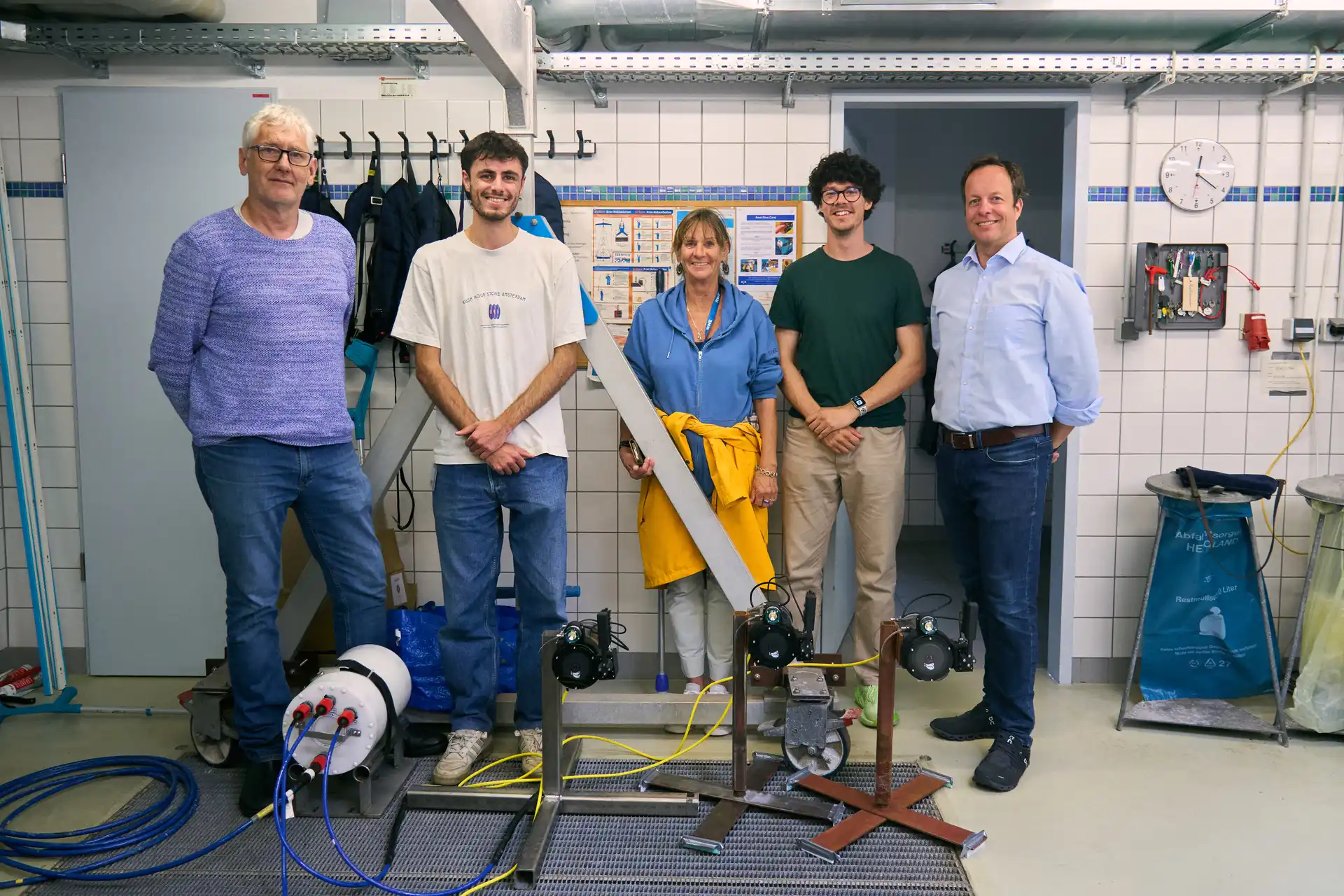
Indoor basin facility photo with Prof. Dr. Philipp Fischer, Prof. Dr. Maarten Boersma, and Dr. Petra Ringeltaube
The Solution
Advanced live-streamed offshore monitoring
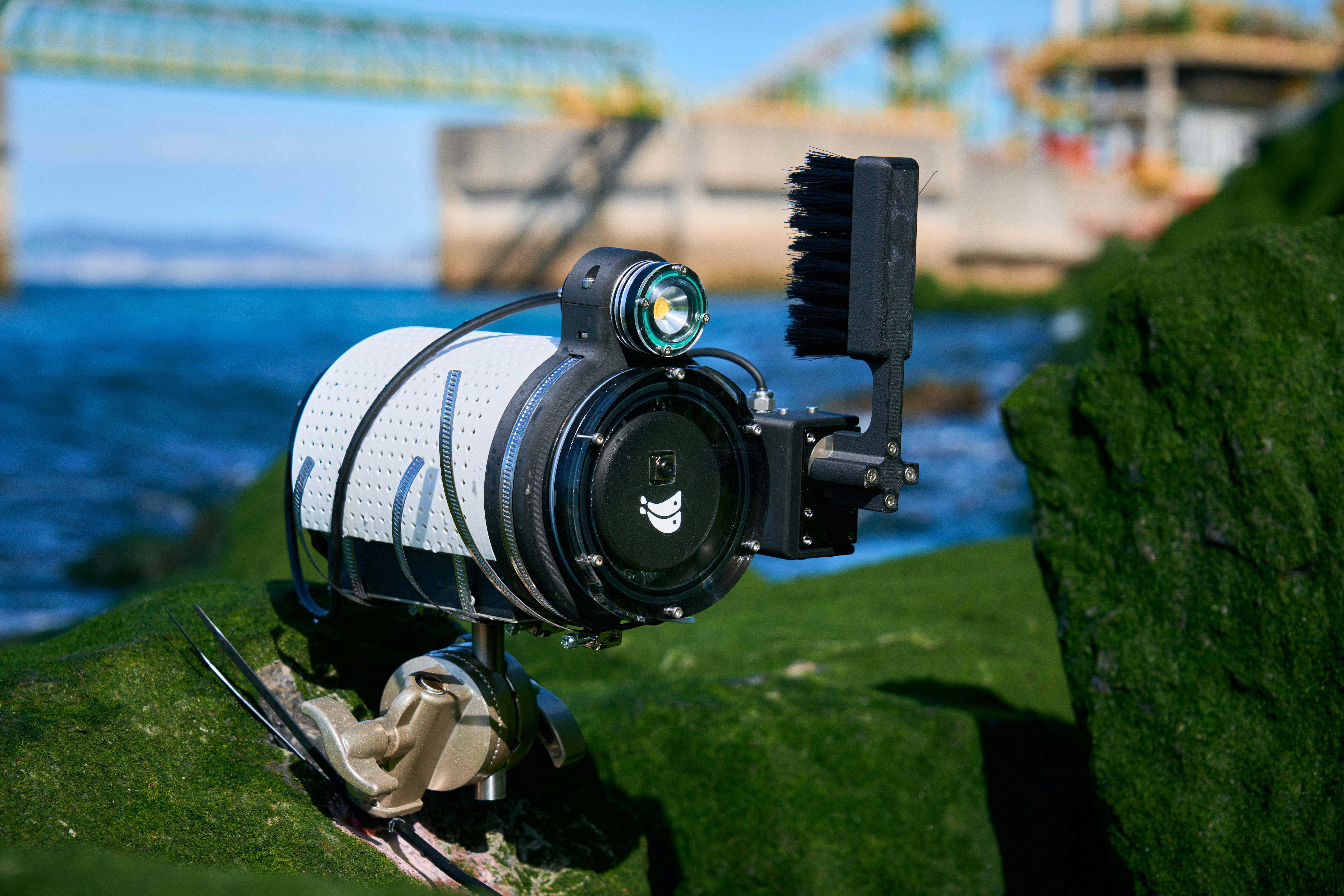
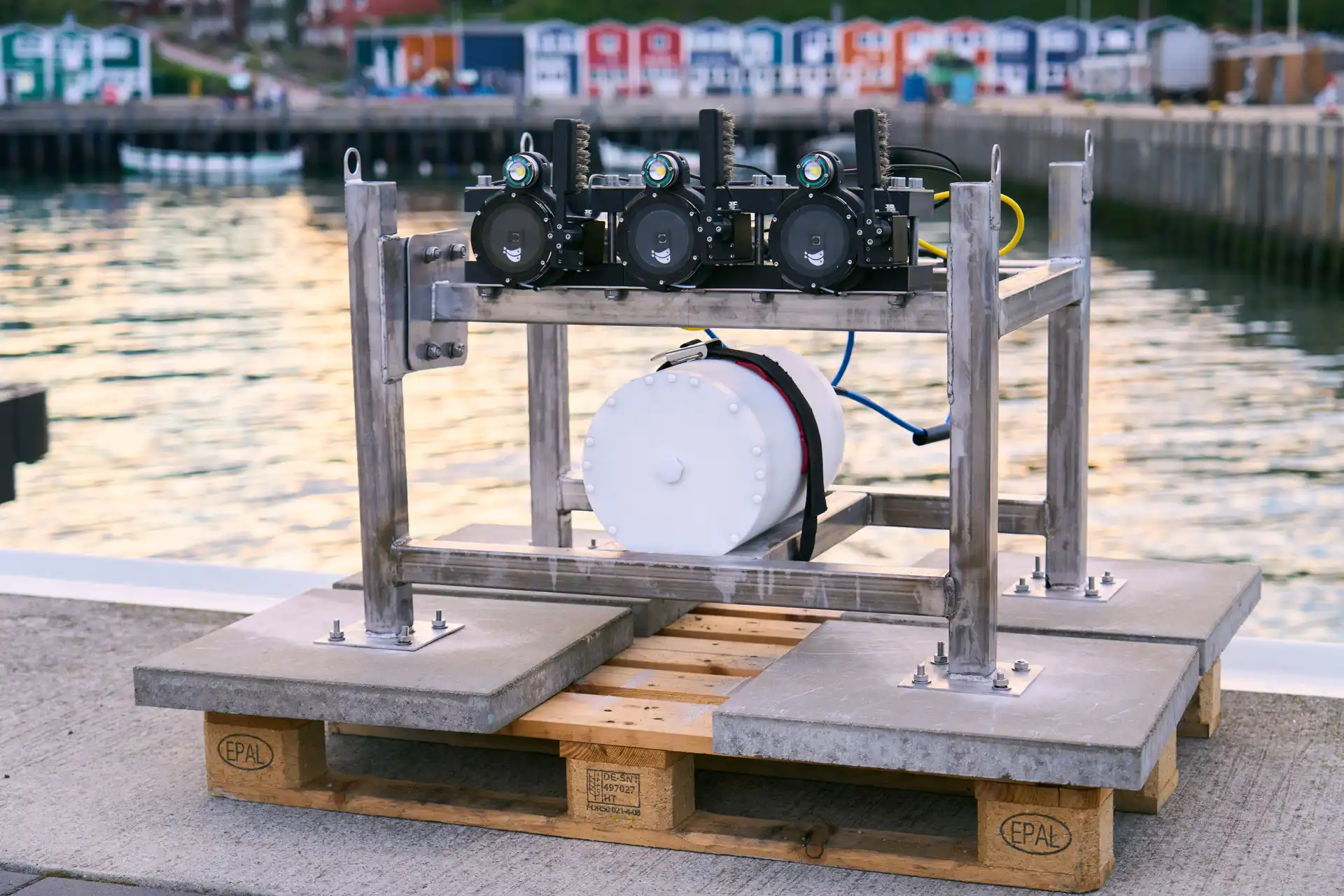
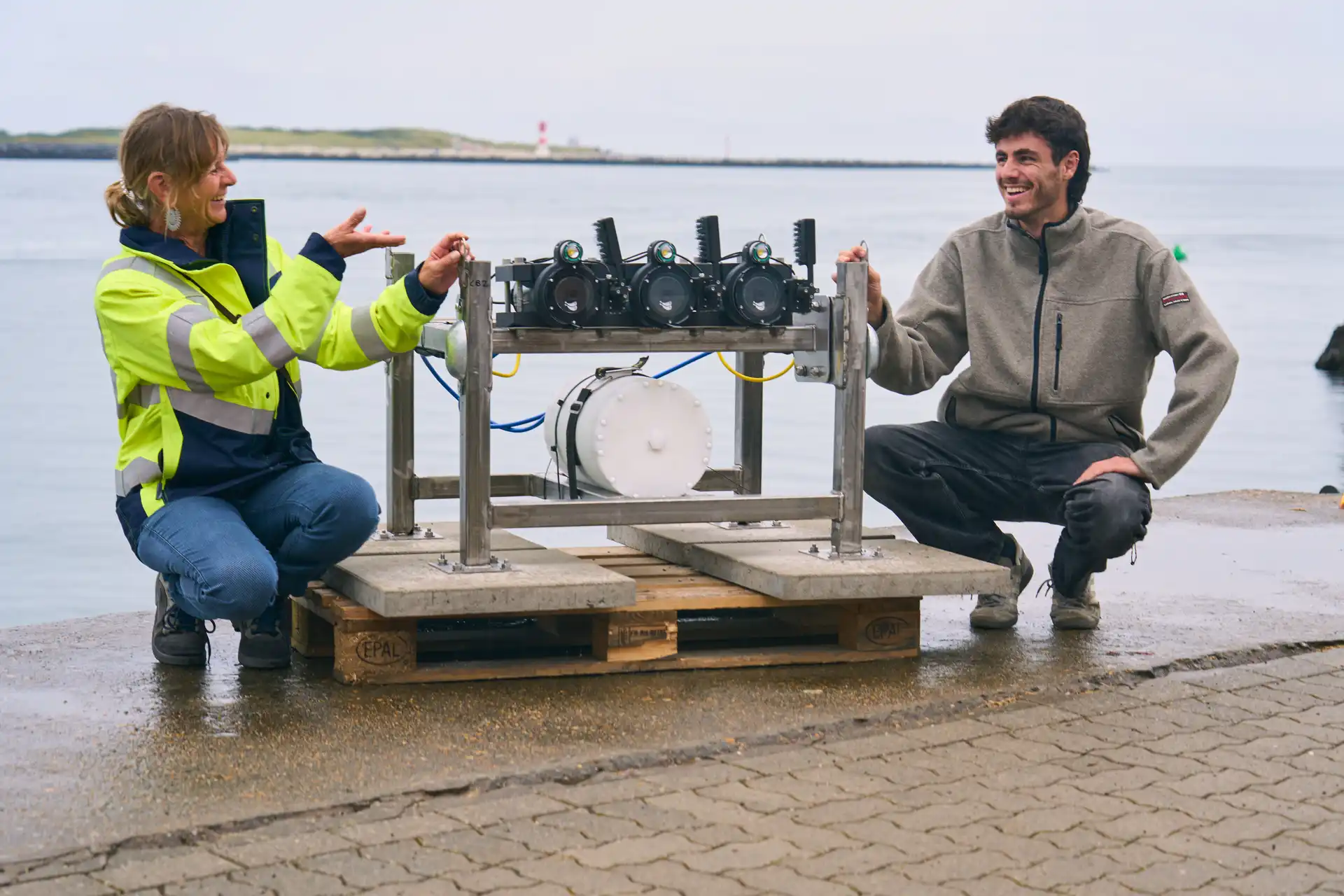
Anemo Robotics deployed a lander-based camera system designed for continuous offshore monitoring around wind farm structures. The setup consists of three seabed landers, each equipped with three AnemoLive cameras.
Cameras are positioned to capture activity across defined distances from offshore structures, enabling comparison of marine life patterns across space. When configured as stereo pairs, the system also supports fish length estimation and biomass calculations.
Unlike traditional monitoring campaigns, the system operates as a live and ongoing setup. Cameras are connected to a fixed power and data source, enabling continuous recording and direct data transfer without retrieval cycles.
Footage is processed using AI-assisted detection workflows (AnemoAI), which are continuously refined using annotated site-specific data, including 5 000 + labelled frames covering local species, lighting conditions, and visibility. This allows the system to adapt over time and deliver consistent, structured observations throughout the deployment.
Monitoring approach & setup
SeaMe’s camera monitoring is built around robust planning and configurations that support day/night operation and multi-month observation windows, so monitoring continues even in the harshest offshore conditions.
Design choice | Why it matters |
|---|---|
3 lander stations at 2 m, 10 m, and 20 m from structures | Enables direct comparison of marine life activity across spatial gradients |
9 AnemoLive wired cameras (3 per lander) | No retrieval needed, enabling long-term, uninterrupted operation |
Stereo camera configuration | Enables fish length estimation and biomass calculations |
Integrated illumination | Captures activity during low-light and night-time periods |
Anti-biofouling wiper system | Maintains image quality over long deployments |
Outcomes
From observation to continuous ecological data
The system operates continuously, generating a live stream of underwater observations from offshore conditions.
Rather than relying on isolated datasets, the setup provides ongoing visibility into marine life activity around offshore structures. The resulting data are processed into structured outputs, including species detection, activity patterns, and temporal insights.
These outputs feed into dashboards and reporting aligned with biodiversity frameworks such as CSRD and TNFD, supporting integration into broader monitoring systems.
The project is currently ongoing, with data continuously collected and processed throughout the deployment period.
Recognition
SeaMe’s impact has been recognised beyond the project team: RWE’s SeaMe won “Environmental Sustainability Project of the Year” at the 2025 IMCA Awards.