FAQ
Find the answers to most common questions


Want to talk to our team faster?
Or send us an email to info@anemorobotics.com
What does Anemo Robotics actually do?
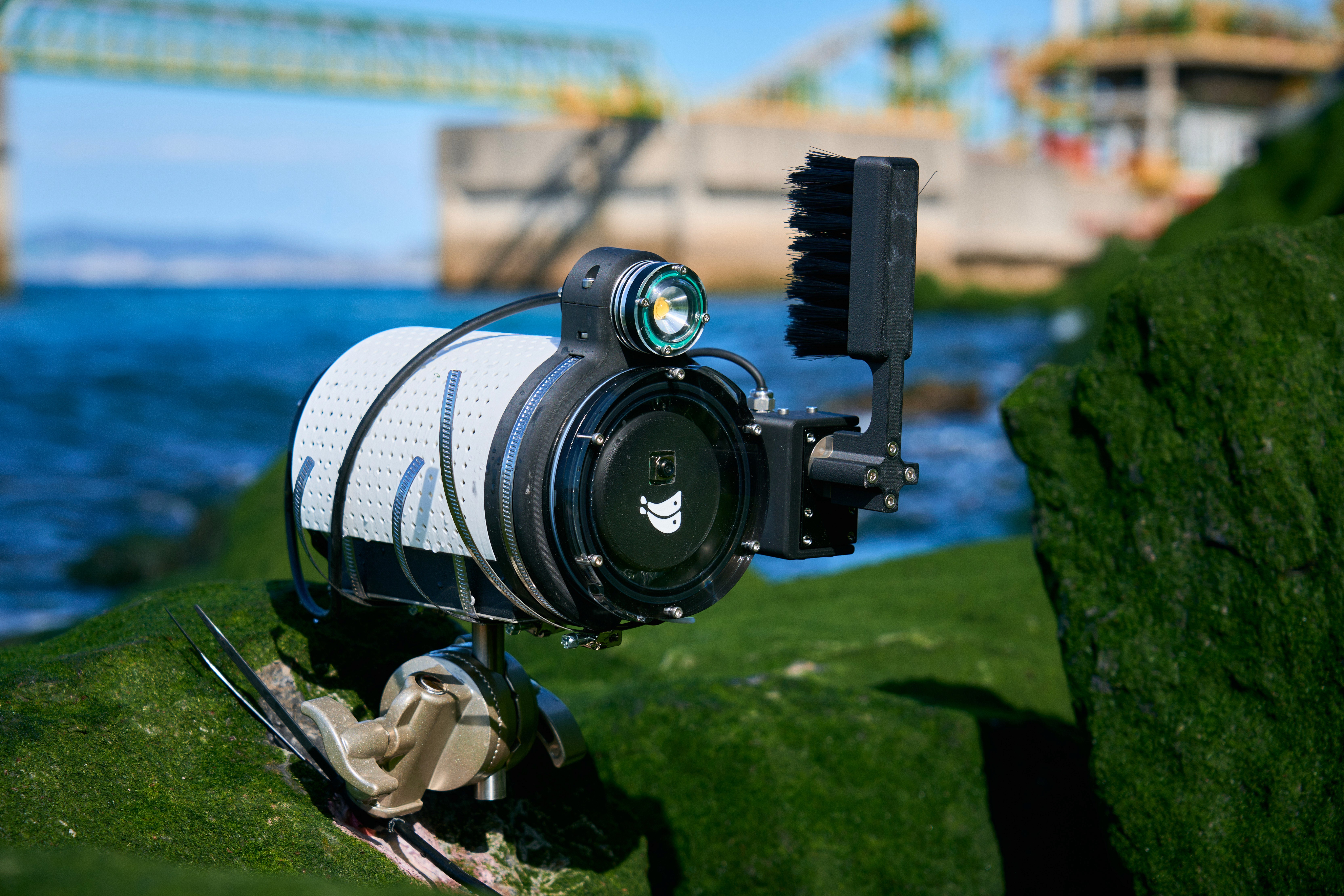
Anemo combines underwater cameras, AI and reporting to turn marine footage into useful biodiversity data. AnemoCam and AnemoLive collect the footage, while AnemoHub turns it into species detections, biodiversity metrics and reports. Use the full system, or just the hardware or software you need.
Why use continuous monitoring instead of traditional surveys?
A survey is a snapshot, and often a gamble on the weather. Continuous monitoring captures day and night, changing conditions, seasons and rare events, showing how marine life actually uses a site over time rather than what happened on one survey day.
How does Anemo analyze underwater video with AI?
Upload your footage to AnemoHub, label a representative sample and train a model for your deployment. Because species, lighting, background and turbidity vary from site to site, each model learns your specific conditions. Once reviewed, it can analyze the full dataset automatically, cutting manual video review by around 90% while keeping results consistent.
What biodiversity data can Anemo measure?
Depending on your project, Anemo can measure species richness and abundance, MaxN, activity patterns, habitat use, behavior and changes over time. Stereo camera setups can also measure fish length and biomass, while control and impact sites can be compared to understand ecosystem change.
Can Anemo analyze footage from other cameras?
Yes. AnemoHub works with footage from Anemo cameras, GoPros, BRUVs, ROVs and existing video archives, as long as the image quality is suitable. You can use the platform without replacing your existing setup, although for the smoothest end-to-end workflow we recommend AnemoCams, which are designed around long-term monitoring and the Anemo platform.
What types of projects is Anemo built for?
Anemo is built for long-term, fixed-point monitoring of fish and other mobile marine life. Projects range from habitat restoration and biodiversity baselines to offshore wind, marine infrastructure, ports, aquaculture and research. Explore our case studies to see how Anemo is used across different environments.
How long can Anemo cameras stay underwater?
On a typical duty cycle, such as recording a short clip every 15–30 minutes, AnemoCam can stay underwater for around three months. Recording less often extends battery life, and external battery packs can push longer deployments further still.
What equipment do I need to deploy Anemo?
AnemoCam can be deployed on a stand, lander or clamp suited to your seabed or structure, and battery cameras can often be lowered directly from a boat. You typically don’t need a research vessel or crane, while divers or an ROV may help at more complex sites.
Still not sure if Anemo works for you?
Send a message to our team or book a call

Copyright © 2026 Anemo Robotics ApS
Copyright © 2026 Anemo Robotics ApS
Copyright © 2026 Anemo Robotics ApS
Copyright © 2026 Anemo Robotics ApS