Offshore wind

Marine biodiversity monitoring for offshore wind farms

Monitor and analyze fish and marine life behavior at turbine foundations and scour protection, with the evidence you need for tenders, permits and nature inclusive design.

Offshore wind turbines at sea
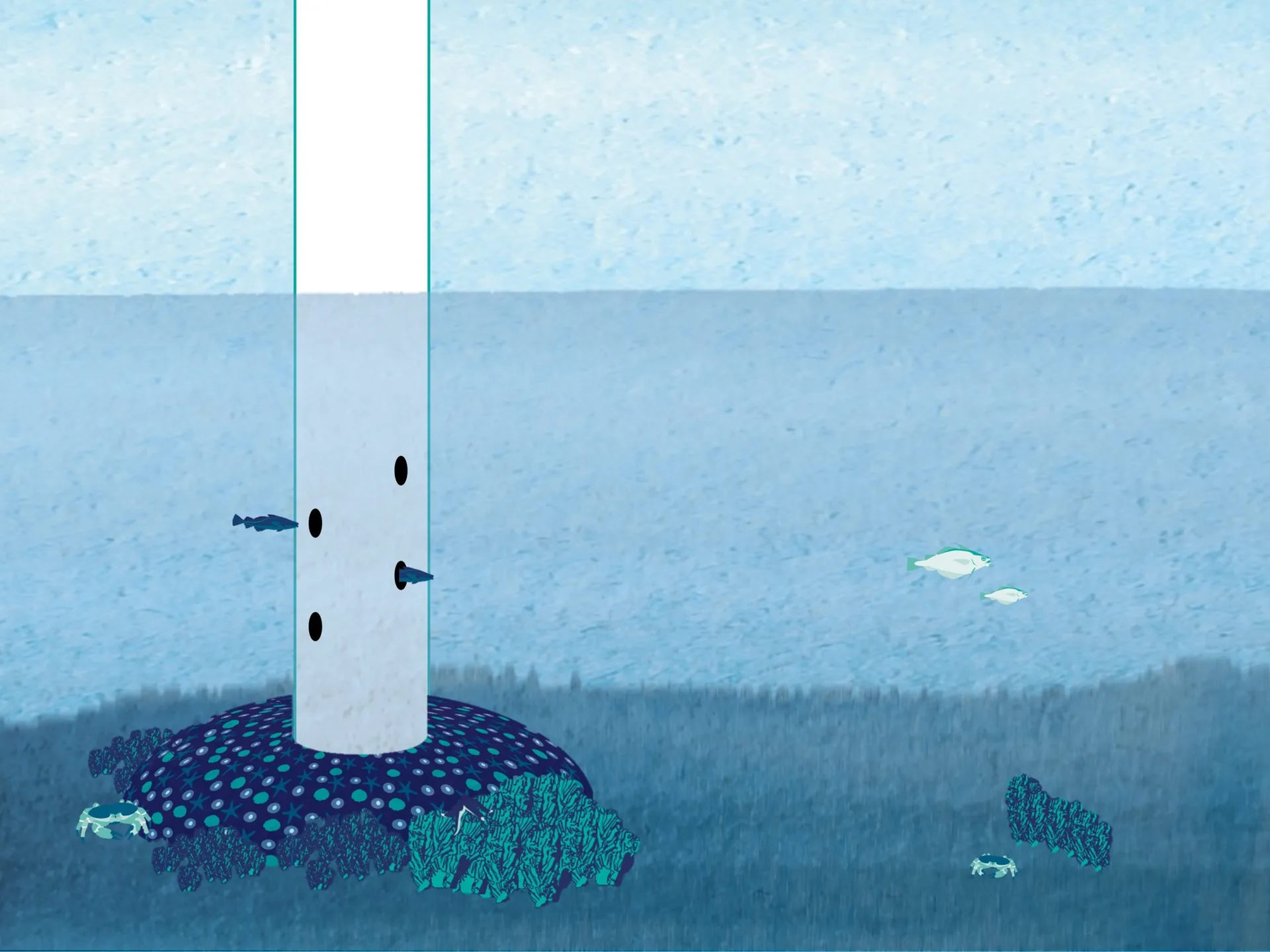
Illustration of a monopile with fish holes and scour protection on the seabed

Offshore biodiversity monitoring

What you get

Understand how offshore wind farms affect marine life

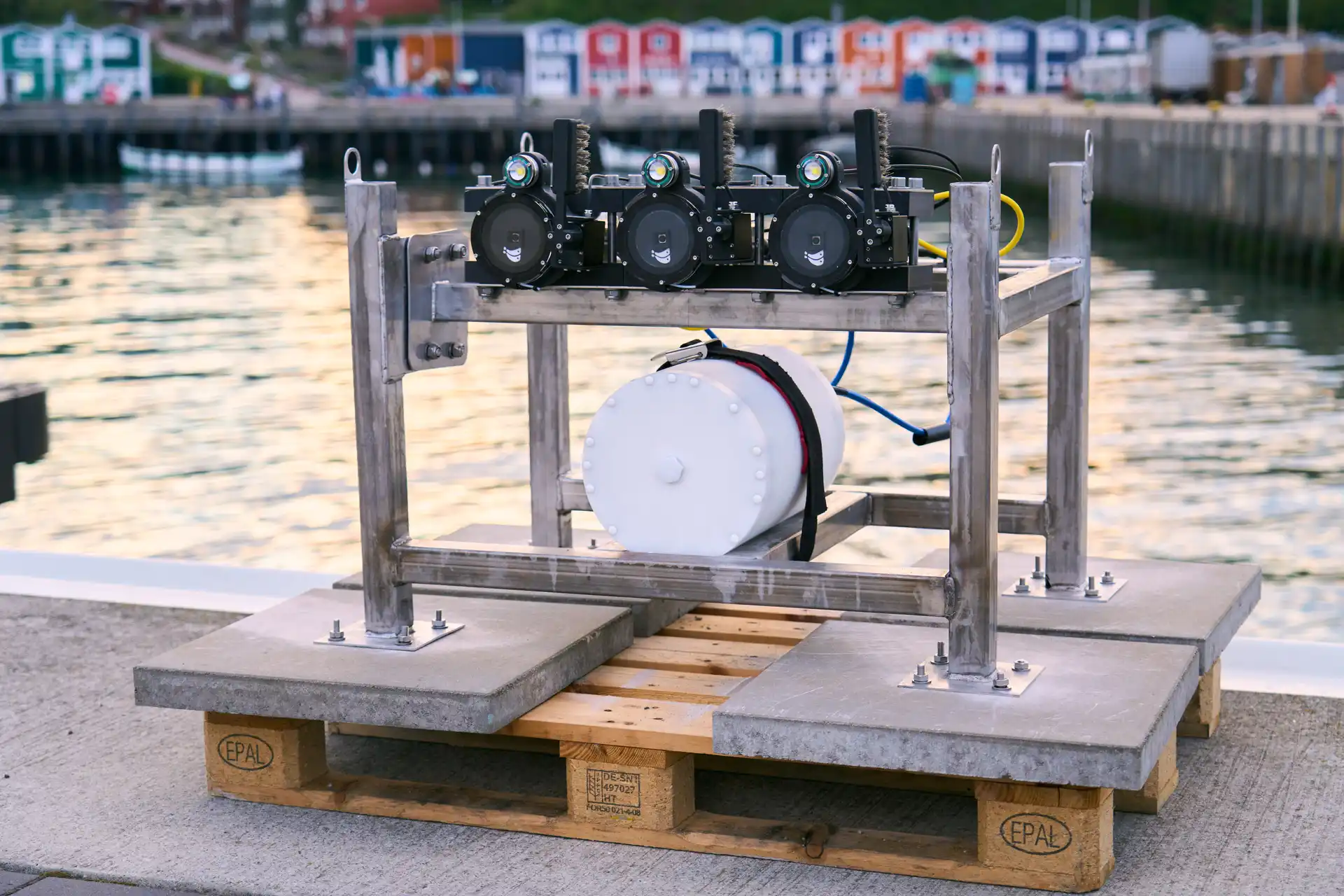
Long-term underwater cameras can record near turbine foundations, scour protection and at reference sites away from the turbines. The cameras follow a consistent recording protocol over several months, capturing marine life activity by day and night and in between surveys.

AnemoHub turns that footage into species-level data on fish counts, MaxN, activity patterns and habitat use. Compare what you observe around offshore structures with reference sites to see which species use these habitats, when they’re most active and where those patterns differ.

Operational monitoring

Operational monitoring

Assess construction and operational impacts

Document which species are present before & after construction

Document which species are present before & after construction

Track fish abundance and activity between survey campaigns

Track fish abundance and activity between survey campaigns

Compare seasonal trends with reference sites

Compare seasonal trends with reference sites

Nature-inclusive design

Nature-inclusive design

Optimize for biodiversity

Observe fish around reef units, foundation features and scour protection vs. control

Observe fish around reef units, foundation features and scour protection vs. control

Compare habitat use across designs and sites

Compare habitat use across designs and sites

Create species-specific heat maps and use findings to refine future installations

Create species-specific heat maps and use findings to refine future installations

Decommissioning

Decommissioning

Make better decisions for marine life

Document which species use existing foundations including rare species

Document which species use existing foundations including rare species

Compare fish abundance at foundations and reference sites across seasons

Compare fish abundance at foundations and reference sites across seasons

Assess which habitats could be affected by removal

Assess which habitats could be affected by removal

A different approach to marine monitoring

Cameras work alongside your existing surveys and add the missing visual layer providing a clearer picture on marine life impact.

Standard surveys

With Anemo solutions

A few days a year

Vessel surveys follow a strict schedule, need a weather window and show a snapshot moment.

Months of data

Each camera records on a set protocol for months, across seasons, without interruption.

Sampled away from the turbines

Trawls stay clear of the foundations and scour protection, gathering general area data.

Measured at the structure

Cameras can sit directly at the foundation, with additional deployments at distance for comparison.

No data on habitat use

Scour protection and foundations create new hiding spots for fish, but few results show how marine life actually uses them.

Evidence for nature-inclusive design

Counts, behavior and habitat use heat maps per species show exactly how fish interact with structures leading to better decisions for nature.

No baseline for decommissioning

Regulators want site-specific evidence before structures can stay in place.

A baseline before decisions

Seasons of data from structures and reference sites, ready when removal plans are due.

FAQ

Questions offshore wind teams ask us

Nejc Novak, Founder & CEO, Anemo Robotics
Ruben Duraes, Sales Lead, Anemo Robotics
Still unclear if Anemo Robotics is for you?

Talk it through with our team

How do you monitor fish around an offshore wind farm?

Place long-term underwater cameras at turbine foundations, on the scour protection and at reference sites away from the turbines. Each camera records on a fixed protocol for months. AI finds and counts the fish, your ecologists confirm the species, and the results sit alongside the surveys your consent requires.

Will the regulator accept camera data?

Cameras are a best-fit method, not a required one. They usually run alongside grab and trawl surveys and add data at the structure that trawls can’t collect. We design the monitoring so the results sit next to your existing baseline.

Does it work in North Sea visibility?

Visibility changes with season, tide and weather. Long deployments record across clear and turbid days, so the dataset doesn’t depend on one survey day. The night light gives up to 2,200 lumens, with an optional red filter. We set expectations for your site before deployment.

Can the cameras use the turbine’s power and data connection?

AnemoLive takes power and data over one cable (PoE) from a connector box up to 100 m away, and streams the site live. Where no connection is available, AnemoCam runs on its own battery. We agree the setup with your operations team.

How long can a camera stay on the seabed?

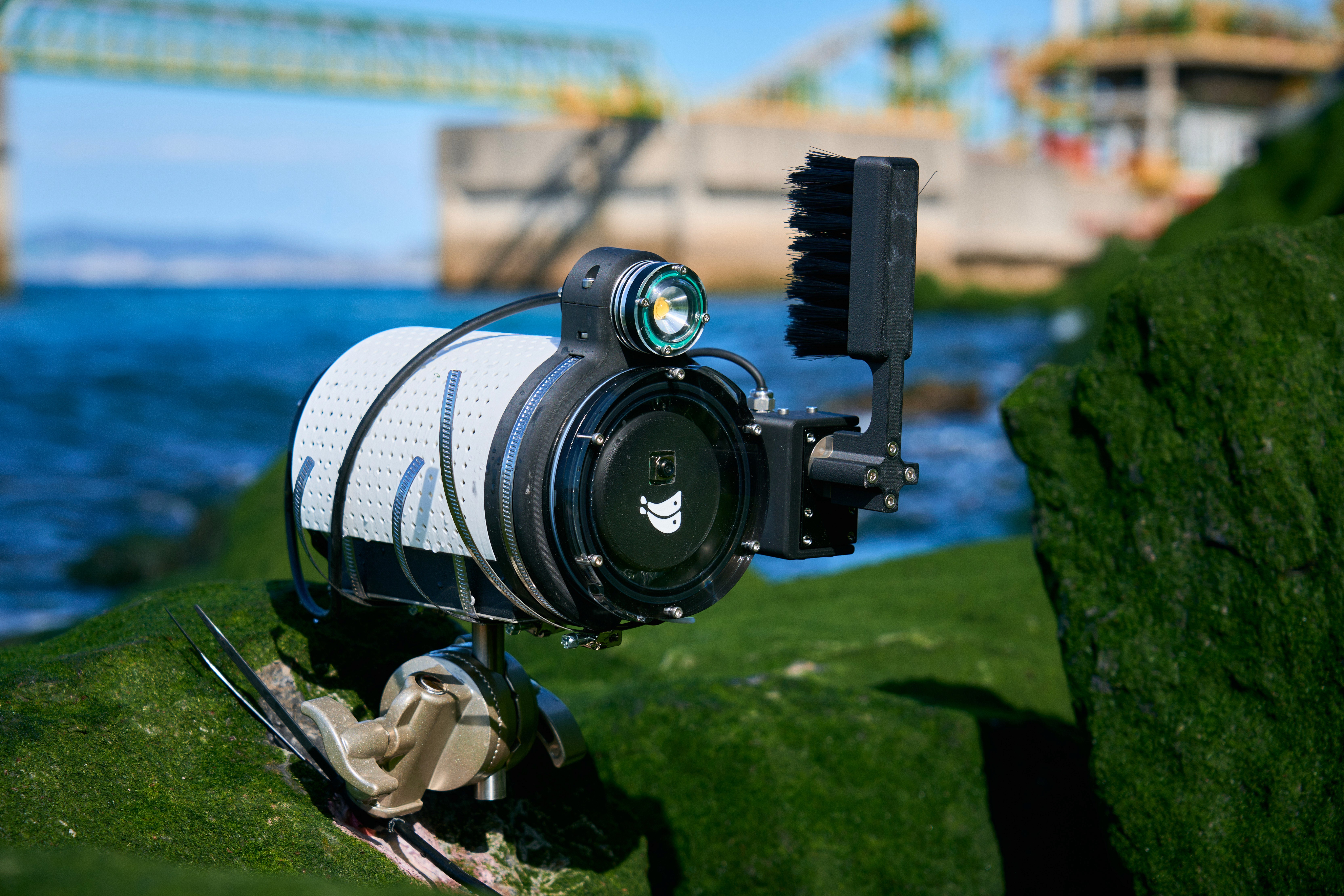
About three months on the standard battery with the default protocol, a 15-second clip every 30 minutes. Larger battery packs extend this up to 24 months. A wiper cleans the lens and light before every clip, so footage stays clear.

What does monitoring cost?

It depends on the number of cameras, live or battery, how long they stay out and how much analysis you need. Book a call and we’ll scope it with you.

Who owns the footage and the data?

You do. Footage, results and the models trained on your footage stay yours. AnemoHub stores them securely, never shares them, and you can export everything to your own tools.

How do you monitor fish around an offshore wind farm?

Place long-term underwater cameras at turbine foundations, on the scour protection and at reference sites away from the turbines. Each camera records on a fixed protocol for months. AI finds and counts the fish, your ecologists confirm the species, and the results sit alongside the surveys your consent requires.

Will the regulator accept camera data?

No regime requires cameras, so they are a best-fit method. In Germany, StUK4 already uses underwater video where the habitat is heterogeneous. Cameras run alongside grab and trawl surveys and add data at the structure, where trawls can't go.

Does it work in North Sea visibility?

Visibility changes with season, tide and weather. Long deployments record across clear and turbid days, so the dataset doesn’t depend on one survey day. The night light gives up to 2,200 lumens, with an optional red filter. We set expectations for your site before deployment.

Can the cameras use the turbine’s power and data connection?

AnemoLive takes power and data over one cable (PoE) from a connector box up to 100 m away, and streams the site live. Where no connection is available, AnemoCam runs on its own battery. We agree the setup with your operations team.

How long can a camera stay on the seabed?

About three months on the standard battery with the default protocol, a 15-second clip every 30 minutes. Larger battery packs extend this up to 24 months. A wiper cleans the lens and light before every clip, so footage stays clear.

What does monitoring cost?

It depends on the number of cameras, live or battery, how long they stay out and how much analysis you need. Book a call and we’ll scope it with you.

How do you monitor fish around an offshore wind farm?

Place long-term underwater cameras at turbine foundations, on the scour protection and at reference sites away from the turbines. Each camera records on a fixed protocol for months. AI finds and counts the fish, your ecologists confirm the species, and the results sit alongside the surveys your consent requires.

Will the regulator accept camera data?

Cameras are a best-fit method, not a required one. They usually run alongside grab and trawl surveys and add data at the structure that trawls can’t collect. We design the monitoring so the results sit next to your existing baseline.

Does it work in North Sea visibility?

Visibility changes with season, tide and weather. Long deployments record across clear and turbid days, so the dataset doesn’t depend on one survey day. The night light gives up to 2,200 lumens, with an optional red filter. We set expectations for your site before deployment.

Can the cameras use the turbine’s power and data connection?

AnemoLive takes power and data over one cable (PoE) from a connector box up to 100 m away, and streams the site live. Where no connection is available, AnemoCam runs on its own battery. We agree the setup with your operations team.

How long can a camera stay on the seabed?

About three months on the standard battery with the default protocol, a 15-second clip every 30 minutes. Larger battery packs extend this up to 24 months. A wiper cleans the lens and light before every clip, so footage stays clear.

What does monitoring cost?

It depends on the number of cameras, live or battery, how long they stay out and how much analysis you need. Book a call and we’ll scope it with you.

Who owns the footage and the data?

You do. Footage, results and the models trained on your footage stay yours. AnemoHub stores them securely, never shares them, and you can export everything to your own tools.

Strengthen your offshore wind monitoring with Anemo

Connect with our team to explore how Anemo cameras fit your site, permits and monitoring plan.

Match monitoring to your consent conditions and research questions

Choose a setup that fits your foundations and survey schedule

Move from a first baseline to long-term monitoring

Already have footage? Ask for a benchmark on your own data.

Trusted by marine innovators:

Anemo Robotics Logo

Copyright © 2026 Anemo Robotics ApS

Anemo Robotics Logo

Copyright © 2026 Anemo Robotics ApS

Anemo Robotics Logo

Copyright © 2026 Anemo Robotics ApS

Anemo Robotics Logo

Copyright © 2026 Anemo Robotics ApS